
- Sečovlje Salt Pans - Dragonja River Valley
- Sv. Peter - Nova vas - Padna
- Pomjan - Nature Park: Karst Edge - Socerb
- Črni Kal - Osp - Kubed
- Momjan - Grožnjan - Pietrapelosa - Mirna
- Baštija - Kostanjica - Parenzana
- Oprtalj - Završje - Livade - Zrenj
- Istarske toplice - Motovun Forest - Višnjan
- Cave Mramornica - Feštini Kingdom - Cave Baredine
- Lim Bay - Kloštar - Kontija - Dvigrad
- Kanfanar - Bale - Palud - Vodnjan -Islands Brijuni - Fažana
- Svetvinčenat - Tinjan - Pićan - Gračišće
- Belaj - Šumber - Kožljak - Paz
- Čepićko Field - Kršan - Boljun Castle - Lupoglav
- Plomin - Kvarner Gulf - Brseč
- Nature park Učka - Mošćenice
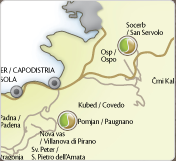
Pomjan - Nature Park: Karst Edge - Socerb
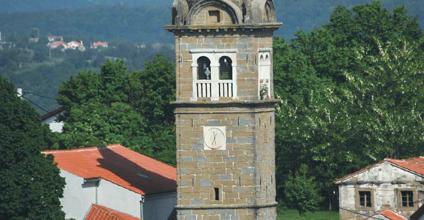
Pomjan
The village at the highest altitude of the Šavrinska Hills, it is said, was named after the apple groves (pomi) that once spread over the surrounding area in the lee of Pomjan Hill. This is a fertile area, rich in water, surrounded by the valleys of Badaševica and Rokava rivers, tributaries of Dragonja, which has always been a favorite meeting place for travelers. Owing to the fact that in ancient...
More
Karst Edge Nature Park
This natural border of sheer limestone cliffs between the continental part of Slovenia and Slovenian Istria is 20 kilometers long and stretches along the Slovenian-Croatian border, from Socerb to Mlini. The area presents a natural transition from the warmer Istria to the colder Karst area, a mixture of continental and Mediterranean climate with numerous natural beauties. The alteration of limestone and flysch, as well as...
More
Socerb
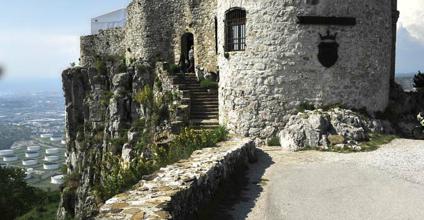
Overlooking the Gulf of Trieste, Socerb Castle, built on the ruins of an Illyrian hill-fort, has for centuries withstood the northern wind bora and ravages of time. It was first mentioned in 1040, and was named after the patron saint of Trieste and martyr, St. Servul (St. Socerb, San Servolo). According to legend, after converting to Christianity Servul hid in the nearby cave (283 or 284) before the governor of...
More
 Print page Send to a friend